
Buying guide
How to Compare Creatine Powders: Grams, Mix, Capsules
Compare creatine powders by grams per serving, price per gram of creatine, and single ingredient versus blend. Mixing and capsule counts included.
Editorial buying guide · Updated · ByDaily Formula Guide Editorial Team ·Editorial policy ·Methodology
Compare grams, then price per gram, then the ingredient list
Compare creatine powders by the grams of creatine in one labeled serving, then by the cost per gram of creatine in the whole container, then by whether the powder is a single ingredient or a blend. Read the creatine line on the Supplement Facts panel, not the scoop count and not the net weight on the tub. For the cost step, divide the current listing price by the creatine grams in the container, and check that listing again before you buy. Other ingredients change the scoop weight and change what that price is paying for.
The worked examples are Micro Ingredients 1 kg (B09YFHGK3F), NatureBell 500 g powder (B09VCTVH98), NatureBell Creatine Monohydrate Capsules, 500 count (B0DDB5BWYP), and Wellah Blueberry Pomegranate, 100 servings (B0DZQRKBGS).
FDA framing: Dietary supplements are not drugs. They are not intended to diagnose, treat, cure, or prevent any disease. This guide quotes where a serving is printed, how the label says to mix that serving, and how to check the arithmetic. It does not choose an amount for you. Follow the label on the container you received, and take personal questions to a qualified professional.
Where the serving size is printed
On a Supplement Facts panel, serving size sits at the top, under the “Supplement Facts” heading, with servings per container next to it. The column underneath is the amount of each ingredient in that serving. The net weight on the front of the bag or tub is the whole container, not one serving.
FDA’s questions-and-answers page on dietary supplements says the panel must list the serving size, servings per container, each dietary ingredient, and the amount per serving (a proprietary blend is the stated exception). The small-entity compliance guide places that serving, the amount recommended for one eating occasion, at the top of the nutrition information, following the words “Serving Size.” This site does not tell you to use it, split it, or repeat it.
Net quantity is a different line. It sits on the front, generally in the bottom 30 percent, in both metric and U.S. units. It is not the scoop. Servings per container is a count, not a weight, and not “1000 g.” The front of the tub is not the whole label.
- 5 g and 5,000 mg are the same weight. Divide milligrams by 1,000. “1 scoop (5 g)” and a creatine line of “5,000 mg” are one quantity, not 10 g.
- Ounces of powder and ounces of water are different lines. Net weight uses weight-ounces. “8 to 12 oz of water” or “6 to 10 oz of water” is a volume of liquid. Do not divide that range into the powder.
A dagger and the words “Daily Value not established” explain an empty % Daily Value cell. They do not change the gram amount.
Grams versus the scoop
A scoop is a tool. The gram weight is the definition, when the panel prints both.
Public Supplement Facts for the Micro Ingredients 1 kg bag, on iHerb in this site’s October 17, 2026 record and on a Vitacost page checked October 23, 2026:
| Panel line | What those reprints show |
|---|---|
| Serving size | 1 scoop (5 g) |
| Servings per container | 200 |
| Creatine monohydrate (micronized) | 5,000 mg |
| % Daily Value | † Daily Value not established |
“1 scoop” and “5 g” are one serving described two ways. If a filled scoop does not land near 5 g, the gram figure is the one the panel defined. A summary line on the same Vitacost page prints “Total servings” and then 1,000 g. One thousand grams is the net weight of this bag, not the serving count. The facts table on the same page still says 200. When a summary line and the panel disagree, use the panel.
The NatureBell 500 g jar, in this site’s record of the Amazon listing checked October 17, 2026, states the serving as 5 g (5,000 mg) and the count as about 100. The brand page describes 1.1 lb of powder and a 5,000 mg amount that equals 100 servings. That serving line does not use the words “1 scoop (5 g).” If a scoop is in the jar, level it and check it against 5 g. On that Amazon listing, the allergen field reads Dairy and the bullets say dairy-free. Read the container if that difference matters to you.
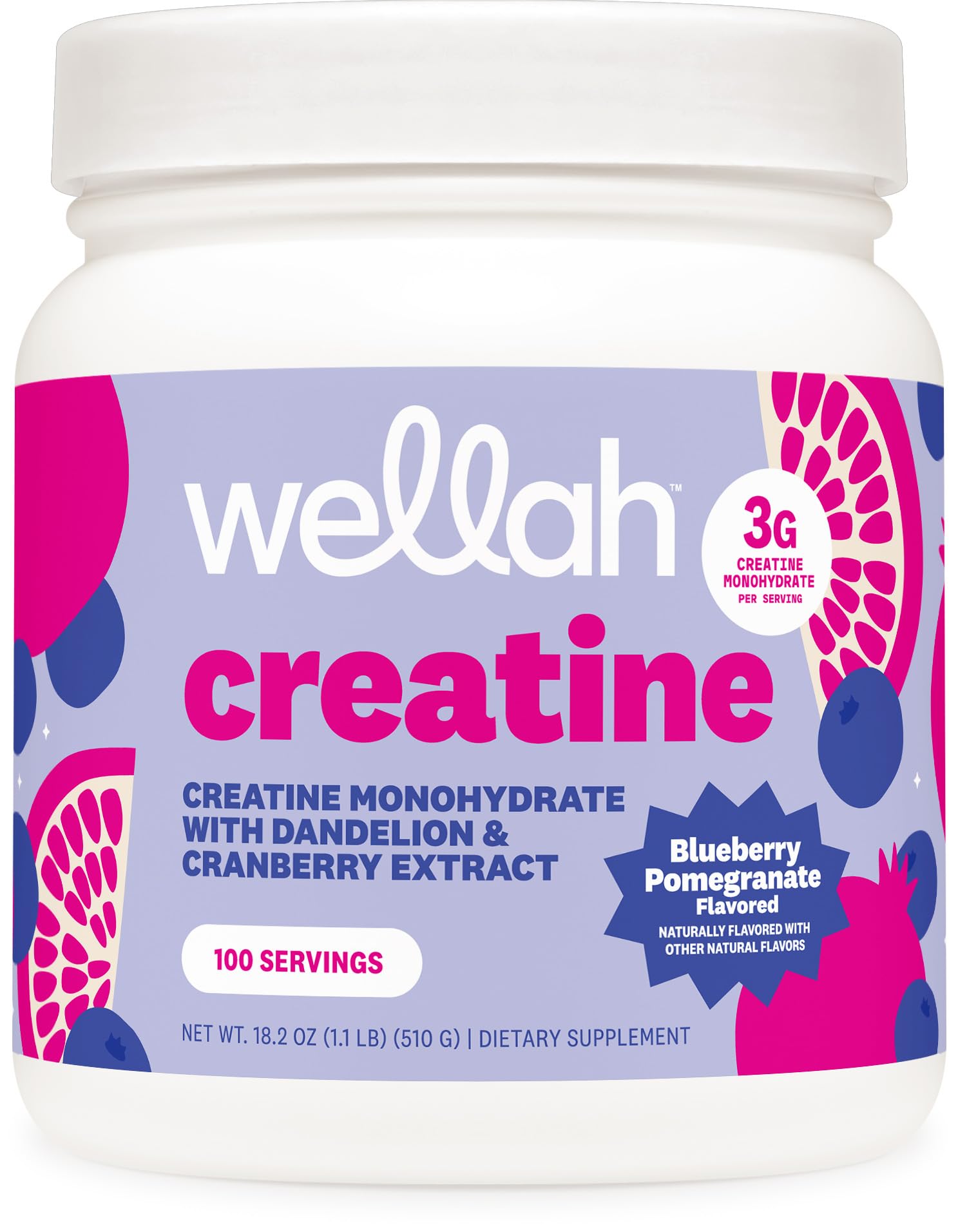
This site’s October 18, 2026 read of Wellah ASIN B0DZQRKBGS states 3 g of creatine monohydrate per scoop and 100 servings. Other ingredients on that label: dandelion extract, D-mannose, cranberry extract, citric acid, natural flavors, L-malic acid, Reb M, silica, calcium silicate, grape powder for color, stevia, and monk fruit extract. The brand-page directions say to mix one scoop in 6 to 10 oz of water. “One scoop” is the tool. “3 g” is the creatine in it, not the weight of the full scoop. The flavored label is covered in the Wellah creatine review.
Servings per container is a division
Use one unit. Grams divided by grams, or milligrams divided by milligrams. For a single-ingredient powder, net weight divided by the serving weight should equal servings per container. A flavored scoop often fails that shortcut, because the creatine line is only part of the powder in the scoop.
Single-ingredient creatine divides cleanly
Micro Ingredients prints a 1 kg bag. One kilogram is 1,000 g.
1,000 g ÷ 5 g = 200 servings.
The panel says 200. The front can also say 2.2 lb. That is the same labeled size: 2.2 pounds is about 998 g, which this label rounds to 1 kg. Divide the gram net weight by 5 g. Do not divide 2.2 by 5.
NatureBell prints 500 g.
500 g ÷ 5 g = 100 servings.
The listing says “about 100.” “About” means the count is rounded. A 1.1 lb marking is the same jar (1.1 lb is about 499 g). A result of 99 or 100 both sit inside “about 100.” A result of 50 means you halved the serving or doubled the jar.
That division is only the 1 kg bag (B09YFHGK3F) and the single 500 g jar (B09VCTVH98). Match the ASIN and the net weight before you reuse 200 or 100. On both labels the serving weight and the creatine weight are the same number. Other ingredients are none, so the scoop weight is the creatine weight.
The flavored scoop is a larger weight than 3 g
Amazon’s unit count for the Wellah 100-serving container, recorded on this site on October 18, 2026, is 18.2 oz. That is a weight, not a drink size.
18.2 oz × 28.35 g per ounce = 515.97 g, about 516 g of powder.
516 g ÷ 100 labeled servings = 5.16 g of powder per scoop, about 5.2 g.
The creatine line is 3 g. The rest of that scoop, about 5.16 g − 3 g = 2.16 g, is the other ingredients listed above. This is arithmetic from the listing’s unit count. This site did not weigh a scoop. If the tub in your hand prints a gram net weight, use that printed gram weight instead of converting 18.2 oz again.
Two divisions that look tidy and are wrong:
- 516 g ÷ 3 g = 172. That treats the creatine line as the whole scoop. The label says 100 servings, not 172.
- 100 Wellah servings compared with 100 NatureBell servings as if they were the same creatine. 100 × 3 g = 300 g of creatine in the Wellah tub. 100 × 5 g = 500 g of creatine in the NatureBell jar. “100” is a count of scoops, not a count of creatine grams.
Public copy on the Wellah brand page, retrieved October 23, 2026, describes a 50-serving tub and lists many flavors, including Blueberry Pomegranate. This site’s earlier note on that page also recorded 100- and 200-serving options. The product here is the 100-serving listing B0DZQRKBGS. Do not copy the 100-serving division onto another size.
Micronized names the milling, not a new compound
On these labels, “micronized” means the powder was milled into smaller particles. The ingredient is still creatine monohydrate. A 2011 review of creatine forms (Jäger et al., Amino Acids) treats creatine monohydrate as the reference form. Milling changes particle size, not the molecule. Smaller particles disperse faster. They do not raise the amount of creatine monohydrate that a given volume of water can hold at a given temperature.
Creatine hydrochloride is a different salt. Readers comparing that form with creatine monohydrate can use the creatine monohydrate vs HCl guide for the form name, the scoop grams, and the servings in those tubs.
Sellers of the two unflavored powders describe the micronized powder as easier to mix. That wording matches faster dispersion. On the public listings, NatureBell describes the jar as third-party tested for purity, and Micro Ingredients describes the bag as third-party lab tested and names a cGMP facility. Those are the sellers’ sentences. Neither page shows a batch certificate. Check the container you receive.
Mesh grades these labels do not print
Creatine monohydrate is sold to supplement makers in particle-size grades often named 80, 200, or 500 mesh. A higher mesh number means a finer screen. Under the ASTM E11 sieve system, No. 80 corresponds to a nominal 180 µm opening and No. 200 to a nominal 75 µm opening.
An ingredient supplier’s mesh note adds two limits. A mesh grade is a cut-off, not a full description: two batches can both pass 200 mesh and still differ in coarse and very fine particles. Finer powder does not raise the solubility limit, and very fine powder can clump or dust. A finished tub rarely names the grade, so the word alone does not tell you whether the powder is 200 mesh, 500 mesh, or a blend of sizes that passed one screen.
Checked October 18, 2026, neither the NatureBell 500 g jar nor the Micro Ingredients 1 kg bag prints a mesh number or a micron range. The word on the title and the ingredient line is the whole particle-size claim.
No micronized word on the flavored blend
Wellah Blueberry Pomegranate does not use the word “micronized.” The ingredient line says creatine monohydrate, and the powder is the flavored blend listed above. A missing word means the seller did not print it. It does not identify a coarser grade, and this set has no plain unflavored powder that simply omits the word.
Mixing creatine powder in the liquid the label names
Both unflavored labels say to mix 5 g with 8 to 12 oz of water. Wellah says to mix one scoop in 6 to 10 oz of water. Those ounces are directions lines, not a new serving size. The NatureBell powder directions also print a day-by-day serving pattern beside the water line. That pattern is the label’s text. This page does not adopt it as a schedule. Follow the label, and ask a qualified professional about personal use.
Ounces on the directions line and published solubility
Creatine monohydrate is only moderately soluble in water. Jäger et al. (2011) and an FDA GRAS notice for creatine monohydrate list the same figures. The water volumes in the right-hand column are arithmetic from those figures, not a mix test from this site.
| Water temperature | Creatine monohydrate per liter | Water for one 5 g serving |
|---|---|---|
| 4 °C / 39 °F (fridge-cold) | About 6 g | About 830 mL (about 28 oz) |
| 20 °C / 68 °F (room temperature) | About 14 g | About 360 mL (about 12 oz) |
| 50 °C / 122 °F (hot) | About 34 g | About 150 mL (about 5 oz) |
At room temperature, full dissolution of 5 g sits near 12 oz, the top of the unflavored range. Eight ounces is about 237 mL, and at about 14 g per liter that volume holds about 3.3 g, so some of a 5 g serving can stay undissolved at the low end. Fridge-cold water holds about 6 g per liter. For a cold drink, mix in room-temperature water first, then add ice. The 5 g column is for the unflavored servings. Wellah already names 6 to 10 oz for its scoop.
Stirring, grit, and a serving left sitting
Grit in the glass is powder that did not dissolve. Level the scoop, because a heaped scoop puts more powder into the same water. Pour the liquid first, add the powder, then stir or shake a closed bottle. A cloudy glass is suspended powder. What has not dissolved settles within minutes, so swirl before the last sip and add a splash if a ring sticks to the bottom.
The same FDA GRAS notice, citing Jäger et al. (2011), notes that creatine in water slowly converts to creatinine, faster at lower pH: about 4% over 3 days at pH 5.5, 12% at pH 4.5, and 21% at pH 3.5. Juices are typically acidic, which can increase how much dissolves and also speed that conversion. The Micro Ingredients listing mentions a shake or smoothie. A thicker drink hides particles, and the solubility limit still applies to the water in the drink. Neither unflavored label lists coffee or tea. Mix one serving and drink it, rather than storing mixed creatine.
Hard clumps in the jar or bag are a moisture issue, not a mesh grade you can see. Keep the lid or zip seal closed. Do not put a wet scoop back into the powder. Store the container away from steam. The same habits are described for other Micro Ingredients powders in how to store and scoop Micro Ingredients powders.
Powder scoops beside the NatureBell capsule bottle
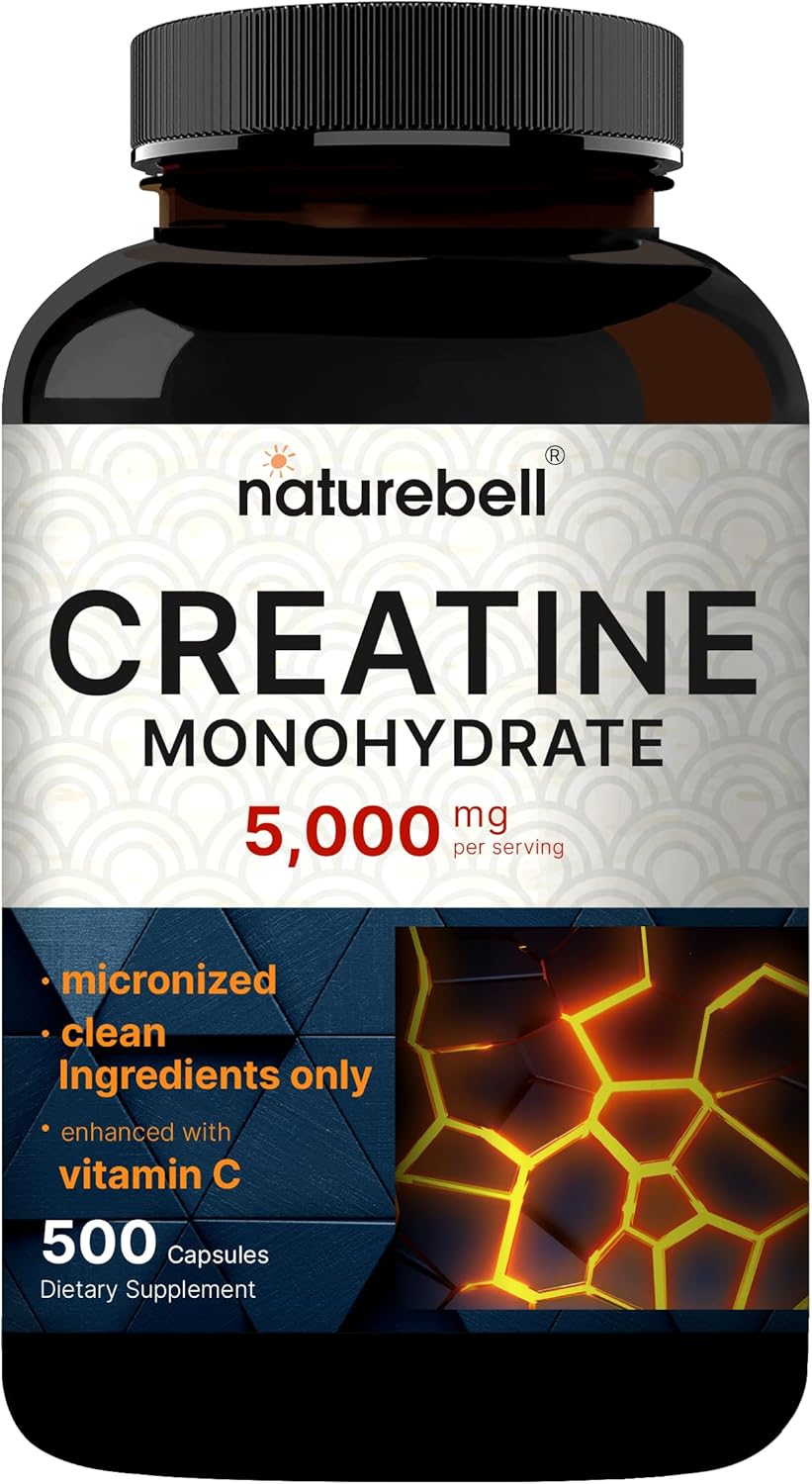
Match grams, then pieces per serving, then the count in the container. On the two unflavored powders, one labeled serving is 5 g in one scoop. NatureBell Creatine Monohydrate Capsules, 500 count, sets one serving at 5,000 mg across 7 capsules, so seven capsules match one 5 g scoop. The piece count belongs to that bottle. Read the serving line on any other bottle before you reuse 7.
The capsule rows are the NatureBell capsule page and Amazon listing B0DDB5BWYP as recorded October 26, 2026. Powder rows are the same panels already cited above.
| Label line | Micro Ingredients powder, 1 kg (B09YFHGK3F) | NatureBell powder, 500 g (B09VCTVH98) | NatureBell capsules, 500 count (B0DDB5BWYP) |
|---|---|---|---|
| Creatine in one labeled serving | 5 g (5,000 mg) | 5 g (5,000 mg) | 5,000 mg (5 g) |
| Pieces per labeled serving | 1 scoop | 1 serving of 5 g | 7 capsules |
| Creatine per piece | 5 g in the scoop | 5 g in the serving | About 714 mg (5,000 mg ÷ 7) |
| Count in the container | 200 scoops | About 100 servings | 500 capsules |
| Full labeled servings in the container | 200 | About 100 | 71, with 3 capsules left (71 × 7 = 497) |
The 3 leftover capsules are about 2.1 g together, not another 5 g serving. The brand page calls the bottle more than a two-month supply, which fits 71 labeled servings and does not name those leftovers.
The capsule bullets say the capsules are free of wheat, soy, dairy, gluten, eggs, fish, shellfish, peanuts, and tree nuts. Those bullets do not name a capsule shell. They use the word micronized, the same milling word as the two unflavored powders. The Micro Ingredients feature text says the powder is formulated without added fillers. The NatureBell powder listing names creatine monohydrate as the ingredient. Those lines describe the container. They do not rank it.
The serving line on the container you buy is the direction. This page does not tell you to swallow 7 capsules or to use one scoop. Follow that label, and ask a qualified professional about personal use. Wellah’s 3 g creatine line is a different scoop from these 5 g servings.
Divide the listing price by creatine grams
Price per gram of creatine is the current listing price divided by the grams of creatine in the container. Check the current listing. This page does not print a dollar amount.
Use these creatine totals as the divisor:
- NatureBell powder, 500 g jar: 500 g (the net weight, because the powder is a single ingredient).
- Micro Ingredients powder, 1 kg bag: 1,000 g.
- Wellah, 100 servings: 300 g of creatine (100 × 3 g). The rest of the tub is the other ingredients, so the same price is also paying for flavor and those ingredients.
- NatureBell capsules, 500 count: about 357 g (500 × 5 g / 7).
When other ingredients are none, the net weight is the creatine total. A blend makes the creatine line one ingredient inside the scoop, so Wellah’s divisor is 300 g of creatine, not the full tub. Both unflavored powders are labeled micronized, and this set has no plain unflavored powder that simply omits the word, so the milling word is not what the division separates. Divide the current listing price by the creatine grams before you compare one container’s price with another’s.
A wider pass over any supplement panel, in the same order, is how to compare supplement labels.
The scoop does not replace the gram line
“Scoop included” does not set the gram weight. The panel does.
An Amazon listing summary for the Micro Ingredients 1 kg bag, retrieved October 23, 2026, says “Scoop included to get the correct measurement every time.” The serving language is still 5 g, one scoop. Do not fill it past the rim. One comment in that summary says a filled scoop weighed 4 g. This site did not weigh a scoop, and one comment is not a lab result. Trust the 5 g on the panel when the scoop and a scale disagree.
Notes on the NatureBell jar do not include a “scoop included” sentence. The serving definition remains 5 g. If the jar has no scoop, weigh 5 g.
Wellah names one scoop. The creatine line is 3 g, and the full powder weight above is about 5.2 g. Those scoops are not substitutes. If a label says the powder is sold by weight, or that settling may occur, a tub that looks low has not changed the gram line. This page does not claim every label prints that sentence.
Checks before two creatine containers are comparable
- Confirm the ASIN and the size: B09YFHGK3F at 1 kg, B09VCTVH98 at 500 g, B0DZQRKBGS at 100 servings of Blueberry Pomegranate, or B0DDB5BWYP at 500 capsules.
- Read serving size, servings per container, and the creatine amount. 5,000 mg is 5 g. For capsules, read the pieces per serving on that bottle.
- If other ingredients are none, divide net-weight grams by the serving grams. If they are not, divide net weight by the serving count, not by the creatine grams.
- Divide the current container price by the creatine grams in the container, using the totals above. Check the listing.
- For powder, level any included scoop. If a scale disagrees with a heaped scoop, keep the grams on the panel.
- For a drink, use the label’s water range and stir. Grit left in the glass is undissolved powder. The tub in your hand wins if it disagrees with a figure here.
Pause on a creatine container when
Skip the buy, or pause, when the size, the serving line, and the seller in front of you do not match the rows above. Pause when you wanted a ranking of strength, absorption, or how the body handles powder versus capsules. Pause when you have a personal health question. Follow the label, and ask a qualified professional. A powder serving here is one scoop in the labeled water range. A NatureBell capsule serving is 7 capsules. Use the format you will actually finish, then run the gram and price-per-gram steps on the current listing.
Outside the scope of this creatine comparison
- Tell you how many servings to use, or turn a directions paragraph into a schedule.
- Rank these products by mixing, taste, or results. This site did not use the powders.
- Treat a seller’s “easier to mix” or “third-party tested” sentence as a batch certificate.
- Replace the panel on your container.
Pages for the flavored label and for any panel
- Wellah creatine review: the flavored 100-serving label used in the scoop arithmetic
- How to compare supplement labels: the same panel order for any product
- How to store and scoop Micro Ingredients powders: a wet scoop and an open pouch
Product-selection path
Products referenced in this guide
A shopper who specifically wants a flavored creatine powder and prefers a larger serving-count package.
- Best for
- A shopper who specifically wants a flavored creatine powder and prefers a larger serving-count package.
- Before buying
- Confirm the current listing details.
Skip if: You want an unflavored single-ingredient format, cannot verify the current label, or have personal health questions that should be reviewed with a qualified professional.
What to verify before buying
Product listings can change. Check the exact variant, size, ingredient or material information, directions, warnings, seller, return terms and current availability before buying.
Last checked: 2026-09-01. This page does not present hands-on product testing.

A shopper who wants a smaller, unflavored single-ingredient creatine jar and is willing to follow the label's water-volume direction when mixing.
- Best for
- A shopper who wants a smaller, unflavored single-ingredient creatine jar and is willing to follow the label's water-volume direction when mixing.
- Before buying
- Confirm the current listing details.
Skip if: You want a flavored drink mix, you want the lowest price per serving in a larger bag, or you expect a supplement to treat a health condition.
What to verify before buying
Product listings can change. Check the exact variant, size, ingredient or material information, directions, warnings, seller, return terms and current availability before buying.
Last checked: 2026-10-26. This page does not present hands-on product testing.

A shopper who already knows they want plain unflavored creatine monohydrate and prefers a larger bag with a lower price per 5 g serving.
- Best for
- A shopper who already knows they want plain unflavored creatine monohydrate and prefers a larger bag with a lower price per 5 g serving.
- Before buying
- Confirm the current listing details.
Skip if: You want a smaller first purchase, a rigid jar instead of a resealable bag, a flavored drink mix, or a product that claims to treat a health condition.
What to verify before buying
Product listings can change. Check the exact variant, size, ingredient or material information, directions, warnings, seller, return terms and current availability before buying.
Last checked: 2026-10-26. This page does not present hands-on product testing.
NatureBell Creatine Capsules, 500 Count
NatureBell
A shopper who wants 5 g of creatine monohydrate counted as 7 capsules and accepts a higher price per gram than the Micro Ingredients 1 kg powder and the NatureBell 500 g powder.
- Best for
- A shopper who wants 5 g of creatine monohydrate counted as 7 capsules and accepts a higher price per gram than the Micro Ingredients 1 kg powder and the NatureBell 500 g powder.
- Before buying
- Confirm the current listing details.
Skip if: You want the lower price per gram of either powder on this site, you do not want to swallow 7 capsules for a 5 g serving, or you have a medical question.
What to verify before buying
Product listings can change. Check the exact variant, size, ingredient or material information, directions, warnings, seller, return terms and current availability before buying.
Last checked: 2026-10-26. This page does not present hands-on product testing.
Approved sources
FAQ
How do I compare creatine powders?
Read the grams of creatine in one labeled serving, then divide the current container price by the creatine grams in the whole container, then check whether the powder is a single ingredient or a blend. Scoop counts are not comparable until those three are written down. Check the current listing for the price.
Where is the serving size on a creatine label?
On a Supplement Facts panel it is the line under the Supplement Facts heading, with servings per container beside or below it. The net weight on the front of the tub is a different figure. FDA supplement-labeling materials place the serving size at the top of that panel.
Is one scoop always 5 grams of creatine?
No. The Micro Ingredients 1 kg panel defines one scoop as 5 g, and that 5 g is creatine monohydrate. The Wellah Blueberry Pomegranate listing states 3 g of creatine monohydrate per scoop, while the container weight implies about 5.2 g of total powder in that scoop.
Does micronized creatine name a different compound?
No. On these labels it means creatine monohydrate was milled to a smaller particle size, and neither micronized container here prints a mesh number. Smaller particles disperse faster, and they do not raise how much creatine monohydrate a given volume of water can hold at a set temperature.
Why can creatine powder sit in the bottom of the glass?
That sediment is undissolved powder. A published figure is about 14 g of creatine monohydrate per liter of water at 20 °C, so a 5 g serving needs about 12 oz at room temperature to dissolve fully. The unflavored labels here say to mix 5 g with 8 to 12 oz of water and to stir.
How many NatureBell capsules match a 5 g creatine scoop?
The NatureBell capsule page sets one serving at 5,000 mg across 7 capsules, so 7 capsules match a 5 g scoop. The bottle holds 500 capsules, which is 71 full servings with 3 capsules left over. Follow the serving line on the bottle you buy.
Does this page say how much creatine to use?
No. It compares labeled grams, the price-per-gram method, mixing directions, and capsule counts, and dietary supplements are not intended to diagnose, treat, cure, or prevent any disease. Follow the label on the container you have, and take personal questions to a qualified professional.